METHODOLOGY FOR ANALYSING LMS DATA TO PREDICT STUDENT DROPOUT RISK IN HIGHER EDUCATION
DOI:
https://doi.org/10.17770/etr2025vol2.8613Keywords:
learning management system, student dropout, e-learning, education theoriesAbstract
Nowadays, educational institutions use Learning Management Systems (LMS) to support students in the learning process. LMS technical data analysis enables the monitoring of student activities and early identification of those at risk of failing a course. Data gathered during the educational process facilitates the adaptation of learning content to meet each student's individual needs. By leveraging this data, institutions can implement adaptive education, allowing study programs to be structured based on personalized learning pathways, intelligent recommendation systems, and dynamic curriculum adjustments. Additionally, by analyzing student model data, it is possible to assess dropout risks. As a result, research on student attrition rates has gained increased attention. This paper examines the methodology for analyzing Moodle LMS data to adaptively detect factors influencing student dropout risk. The research explores the potential of analyzing log file data generated by Moodle LMS to identify student model parameters and their impact on student success throughout the entire educational process. By utilizing learning patterns and engagement indicators, activity log data from more than seven hundred students at Riga Technical University's Moodle e-learning system was analyzed. The research aimed to identify correlations and relationships between several factors, including the availability of resources for students, the number of graded activities, activity types, views, and other relevant data. By analyzing correlations between fluctuations in students' learning achievements and behavioral patterns in e-learning platforms, the study aims to identify key indicators and metrics for predicting dropout tendencies. The findings suggest that a decline in engagement, the presence of negative patterns, or the absence of consistent learning behaviors serve as reliable indicators of students at risk of dropping out.
References
J. Pecuchova and M. Drlik, “Enhancing the Early Student Dropout Prediction Model Through Clustering Analysis of Students’ Digital Traces,” IEEE Access, vol. 12, pp. 159336–159367, 2024, [Online] Available: IEEE Xplore. https://ieeexplore.ieee.org/document/10736593 [Accessed Mar. 04, 2025.], https://doi.org/10.1109/ACCESS.2024.3486762
I. D. Stanciu, Á. Hernández-García, M. Á. Conde, and N. Nistor, “Decoding a decade. Trends and evolution in learning analytics: A comprehensive synthesis,” Computers in Human Behavior, vol. 165, p. 108526, Apr. 2025, [Online] Available: ScienceDirect https://www.sciencedirect.com/science/article/pii/S0747563224003947?via%3Dihub [Accessed Mar. 04, 2025.], https://doi.org/10.1016/j.chb.2024.108526
S. Sarker, M. K. Paul, S. T. H. Thasin, and Md. A. M. Hasan, “Analyzing students’ academic performance using educational data mining,” Computers and Education: Artificial Intelligence, vol. 7, p. 100263, Dec. 2024, [Online] Available: ScienceDirect https://www.sciencedirect.com/science/article/pii/S2666920X24000663?via%3Dihub [Accessed Mar. 04, 2025.], https://doi.org/10.1016/j.caeai.2024.100263
I. Mwalumbwe and J. Mtebe, “Using Learning Analytics to Predict Students’ Performance in Moodle Learning Management System: A Case of Mbeya University of Science and Technology,” The Electronic Journal of Information Systems in Developing Countries, vol. 79, no. 1, pp. 1–13, Mar. 2017, [Online] Available: Wiley Online Library https://onlinelibrary.wiley.com/doi/10.1002/j.1681-4835.2017.tb00577.x [Accessed Mar. 04, 2025.], https://doi.org/10.1002/j.1681-4835.2017.tb00577.x
I. Al-Kindi, Z. Al-Khanjari, and Y. Jamoussi, “Extracting student patterns from log file Moodle course: A case study,” International Journal of Evaluation and Research in Education (IJERE), vol. 11, no. 2, Art. no. 2, Jun. 2022, [Online] Available: IJERE https://ijere.iaescore.com/index.php/IJERE/article/view/23242 [Accessed Mar. 04, 2025.], https://doi.org/10.11591/ijere.v11i2.23242
M. Shoaib, N. Sayed, J. Singh, J. Shafi, S. Khan, and F. Ali, “AI student success predictor: Enhancing personalized learning in campus management systems,” Computers in Human Behavior, vol. 158, p. 108301, Sep. 2024, [Online] Available: ScienceDirect https://www.sciencedirect.com/science/article/abs/pii/S0747563224001699?via%3Dihub [Accessed Mar. 04, 2025.], https://doi.org/10.1016/j.chb.2024.108301
A. M. Rabelo and L. E. Zárate, “A model for predicting dropout of higher education students,” Data Science and Management, vol. 8, no. 1, pp. 72–85, Mar. 2025, [Online] Available: ScienceDirect https://www.sciencedirect.com/science/article/pii/S2666764924000341?via%3Dihub [Accessed Mar. 04, 2025.], https://doi.org/10.1016/j.dsm.2024.07.001
H. S. Park and S. J. Yoo, “Early Dropout Prediction in Online Learning of University using Machine Learning,” JOIV : International Journal on Informatics Visualization, vol. 5, no. 4, pp. 347–353, Dec. 2021, [Online] Available: JOIV https://joiv.org/index.php/joiv/article/view/732 [Accessed Mar. 04, 2025.], https://doi.org/10.30630/joiv.5.4.732
M. M. Tamada, R. Giusti, and J. F. de M. Netto, “Predicting Students at Risk of Dropout in Technical Course Using LMS Logs,” Electronics, vol. 11, no. 3, Art. no. 3, Jan. 2022, [Online] Available: MDPI https://www.mdpi.com/2079-9292/11/3/468 [Accessed Mar. 04, 2025.], https://doi.org/10.3390/electronics11030468
Z. Song, S.-H. Sung, D.-M. Park, and B.-K. Park, “All-Year Dropout Prediction Modeling and Analysis for University Students,” Applied Sciences, vol. 13, no. 2, Art. no. 2, Jan. 2023, [Online] Available: MDPI https://www.mdpi.com/2076-3417/13/2/1143 [Accessed Mar. 04, 2025.], https://doi.org/10.3390/app13021143
M. Vaarma and H. Li, “Predicting student dropouts with machine learning: An empirical study in Finnish higher education,” Technology in Society, vol. 76, p. 102474, Mar. 2024, [Online] Available: ScienceDirect https://www.sciencedirect.com/science/article/pii/S0160791X24000228?via%3Dihub [Accessed Mar. 04, 2025.], https://doi.org/10.1016/j.techsoc.2024.102474
]M. Sayed, “Student Progression and Dropout Rates Using Convolutional Neural Network: A Case Study of the Arab Open University,” Journal of Advanced Computational Intelligence and Intelligent Informatics, vol. 28, no. 3, pp. 668–678, May 2024, [Online] Available: ResearchGate https://www.researchgate.net/publication/380726606_Student_Progression_and_Dropout_Rates_Using_Convolutional_Neural_Network_A_Case_Study_of_the_Arab_Open_University [Accessed Mar. 04, 2025.], https://doi.org/10.20965/jaciii.2024.p0668
M. Phan, A. De Caigny, and K. Coussement, “A decision support framework to incorporate textual data for early student dropout prediction in higher education,” Decision Support Systems, vol. 168, p. 113940, May 2023, [Online] Available: ScienceDirect https://www.sciencedirect.com/science/article/abs/pii/S0167923623000155?via%3Dihub [Accessed Mar. 04, 2025.], https://doi.org/10.1016/j.dss.2023.113940
]V. Realinho, J. Machado, L. Baptista, and M. V. Martins, “Predicting Student Dropout and Academic Success,” Data, vol. 7, no. 11, Art. no. 11, Nov. 2022, [Online] Available: MDPI https://www.mdpi.com/2306-5729/7/11/146 [Accessed Mar. 04, 2025.], https://doi.org/10.3390/data7110146
M. C. Sáiz-Manzanares, J. J. Rodríguez-Díez, J. F. Díez-Pastor, S. Rodríguez-Arribas, R. Marticorena-Sánchez, and Y. P. Ji, “Monitoring of Student Learning in Learning Management Systems: An Application of Educational Data Mining Techniques,” Applied Sciences, vol. 11, no. 6, Art. no. 6, Jan. 2021, [Online] Available: MDPI https://www.mdpi.com/2076-3417/11/6/2677 [Accessed Mar. 04, 2025.], https://doi.org/10.3390/app11062677
]M. Tamada, R. Giusti, and J. Magalhaes Netto, Predicting Student Performance Based on Logs in Moodle LMS. p. 8. 2021, [Online] Available: IEEE Xplore https://ieeexplore.ieee.org/document/9637274 [Accessed Mar. 04, 2025.], https://doi.org/10.1109/FIE49875.2021.9637274
L. Bognár and T. Fauszt, “Factors and conditions that affect the goodness of machine learning models for predicting the success of learning,” Computers and Education: Artificial Intelligence, vol. 3, p. 100100, Jan. 2022, [Online] Available: ScienceDirect https://www.sciencedirect.com/science/article/pii/S2666920X22000558?via%3Dihub [Accessed Mar. 04, 2025.], https://doi.org/10.1016/j.caeai.2022.100100
R. Huang, M. A. Adarkwah, M. Liu, Y. Hu, R. Zhuang, and T. Chang, “Digital Pedagogy for Sustainable Education Transformation: Enhancing Learner-Centred Learning in the Digital Era,” Front. Digit. Educ., vol. 1, no. 4, pp. 279–294, Dec. 2024, [Online] Available: Springer Nature Link https://link.springer.com/article/10.1007/s44366-024-0031-x [Accessed Mar. 04, 2025.], https://doi.org/10.1007/s44366-024-0031-x
C. N. Akpen, S. Asaolu, S. Atobatele, H. Okagbue, and S. Sampson, “Impact of online learning on student’s performance and engagement: a systematic review,” Discov Educ, vol. 3, no. 1, p. 205, Nov. 2024, [Online] Available: Springer Nature Link https://link.springer.com/article/10.1007/s44217-024-00253-0 [Accessed Mar. 04, 2025.], https://doi.org/10.1007/s44217-024-00253-0
L. Yuerong, M. Na, Y. Xiaolu, and S. S. Alam, “Self-determination and perceived learning in online learning communities,” Sci Rep, vol. 14, no. 1, p. 24538, Oct. 2024, [Online] Available: Nature https://www.nature.com/articles/s41598-024-74878-4 [Accessed Mar. 04, 2025.], https://doi.org/10.1038/s41598-024-74878-4
M. A. Al Mamun and G. Lawrie, “Cognitive presence in learner–content interaction process: The role of scaffolding in online self-regulated learning environments,” J. Comput. Educ., vol. 11, no. 3, pp. 791–821, Sep. 2024, [Online] Available: Springer Nature Link https://link.springer.com/article/10.1007/s40692-023-00279-7 [Accessed Mar. 04, 2025.], https://doi.org/10.1007/s40692-023-00279-7
Z. Li et al., “Students’ online learning adaptability and their continuous usage intention across different disciplines,” Humanit Soc Sci Commun, vol. 10, no. 1, pp. 1–10, Nov. 2023, [Online] Available: Nature https://www.nature.com/articles/s41599-023-02376-5 [Accessed Mar. 04, 2025.], https://doi.org/10.1057/s41599-023-02376-5
D. Delen, Predictive Analytics: Data Mining, Machine Learning and Data Science for Practitioners, 2nd ed. 2020. [Online]. Available: https://www.oreilly.com/library/view/predictive-analytics-data/9780135946527/ [Accessed: Mar. 04, 2025]
“Moodle 4.3 Database.” [Online]. Available: https://www.examulator.com/er/4.3/ [Accessed: Mar. 04, 2025.]
“Moodle2erd.png (3854×2641).” [Online]. Available: https://docs.moodle.org/dev/images_dev/5/5a/Moodle2erd.png [Accessed: Mar. 04, 2025.]
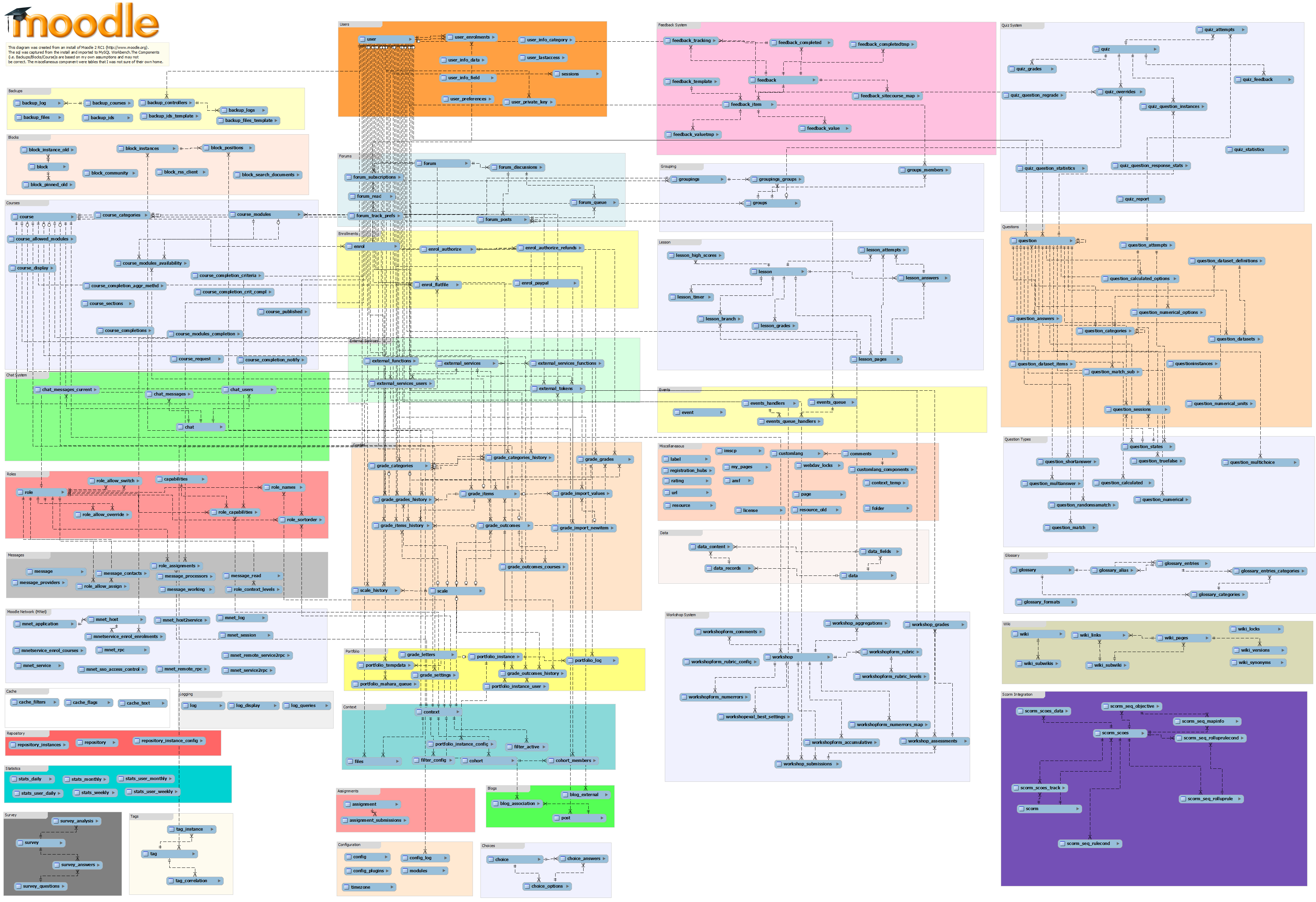
“Large installations - MoodleDocs.”. [Online]. Available: https://docs.moodle.org/405/en/Large_installations [Accessed: Mar. 05, 2025]
“Events API - MoodleDocs.” [Online]. Available: https://docs.moodle.org/dev/Events_API [Accessed: Mar. 04, 2025.]
J. Han, M. Kamber, and Pei, Data Mining: Concepts and Techniques, 3rd ed. Morgan Kaufmann, 2011. [Online]. Available: https://www.oreilly.com/library/view/data-mining-concepts/9780123814791/ [Accessed: Mar. 04, 2025.]
S. Jurenoka, “Development of Methods and Models for Generating the Adaptive Curriculum Based on the Student Knowledge Level,” PhD, Riga Technical University, Latvia, Riga, 2023. [Online] Available: RTU Press https://ebooks.rtu.lv/product/development-of-methods-and-models-for-generating-the-adaptive-curriculum-based-on-the-student-knowledge-level/?lang=en [Accessed Mar. 04, 2025.], https://doi.org/10.7250/9789934229541
S. Jurenoka and J. Grundspenkis, “Development of Methods and Models for Generating an Adaptive Learning Plan Based on the User’s Level of Knowledge,” BJMC, vol. 11, no. 1, 2023, [Online] Available: Baltic J. Modern Computing https://www.bjmc.lu.lv/fileadmin/user_upload/lu_portal/projekti/bjmc/Contents/11_1_06_Jurenoka.pdf [Accessed Mar. 04, 2025.], https://doi.org/10.22364/bjmc.2023.11.1.06
Downloads
Published
Issue
Section
License
Copyright (c) 2025 Linda Barbare, Aleksejs Jurenoks, Magone Rauba, Zane Viskere

This work is licensed under a Creative Commons Attribution 4.0 International License.